
informational 6 min read
Louvre History: From Fortress to Palace to Museum
Updated October 28, 2026
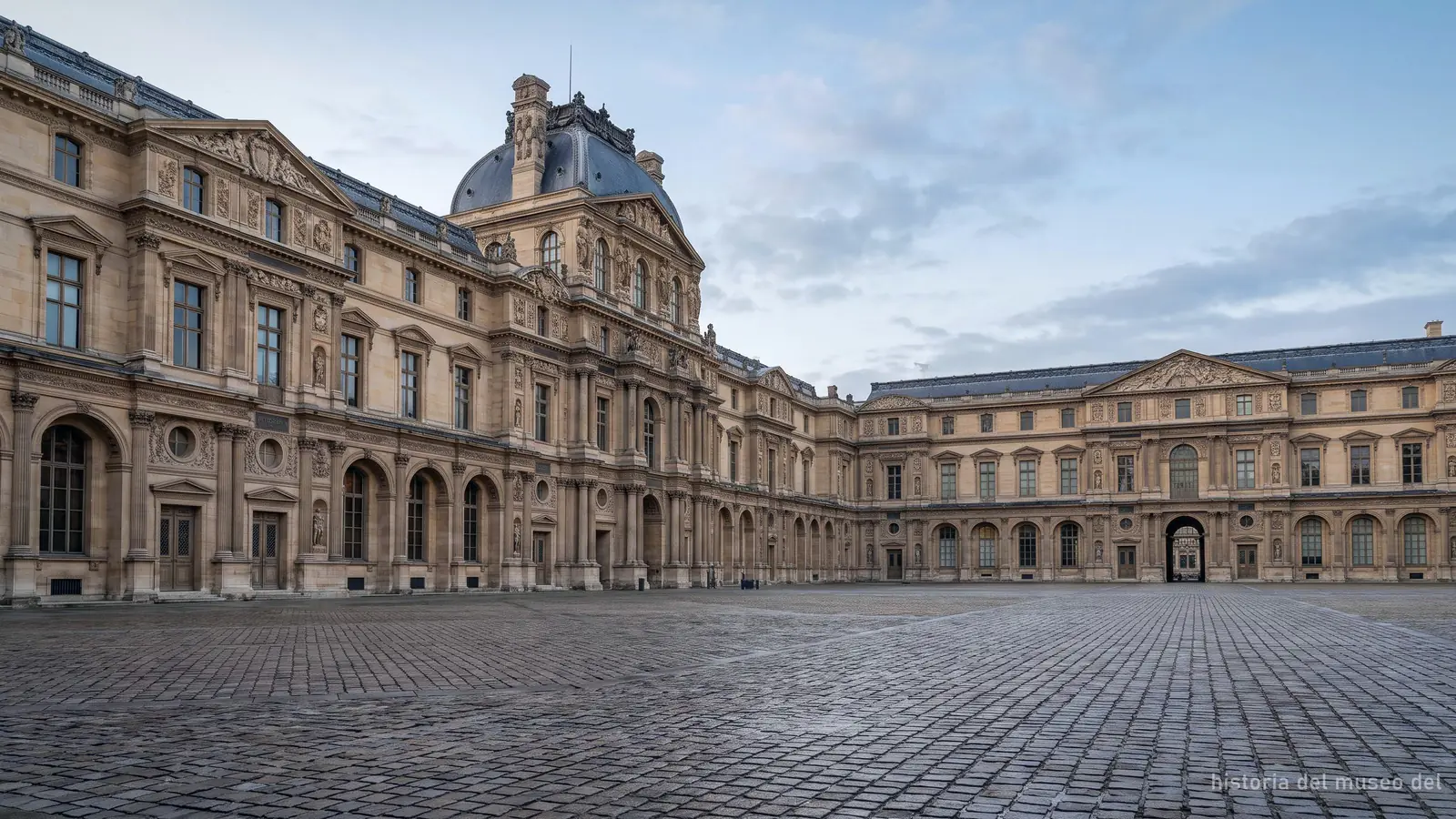
Louvre history begins in 1190 with a fortress beside the Seine, continues through more than five centuries as the Louvre Palace of the kings of France, and makes the leap to public museum in 1793, during the Revolution. The building has kept growing ever since: Napoleon III joined it to the Tuileries in the mid-19th century, and in 1989 the Grand Louvre project gave it the glass pyramid that is now its main entrance.
Why is it called the Louvre?
Nobody knows for sure. The most quoted theory was recorded by the historian Henri Sauval (1623–1676), who linked the name to the Frankish term leovar or leower, “fortified place”. It is a theory, not a proven fact, and other explanations exist alongside it. What is certain is that the name referred to the medieval castle long before the museum existed.
What was the Louvre before it was a museum?
Before it was a museum, the Louvre was a fortress and then a royal residence. These are the key dates, according to the “Palacio del Louvre” entry on Spanish Wikipedia:
- 1190. Philip Augustus orders a fortress on the banks of the Seine to defend Paris from the west. It was a defensive arsenal, not a home for the king.
- 1358. Charles V begins enlarging it and turns it into a residence; he also gathered art collections there.
- 1546. Francis I begins replacing the medieval keep with a Renaissance palace designed by Pierre Lescot. He died in 1547 and the work was left half-finished.
- 1564. Catherine de’ Medici begins the Tuileries Palace, west of the Louvre.
- 1589–1610. Henri IV drives the “Grand Design” to join the Louvre and the Tuileries with the Grande Galerie along the river.
- 1665–1680. Claude Perrault designs the colonnade of the east façade.
- 1682. Louis XIV moves the court to Versailles and the Louvre stops being the king’s main residence. In the 18th century the Academies move in.
Remains of the moat and foundations of Philip Augustus’s fortress can still be seen on level -1 of the Sully wing, where the museum explains how the palace grew around the medieval castle: the Louvre map by wing helps you find them.
When did the Louvre become a museum?
The Louvre became a museum in 1793. The idea was older: in 1774 the Count of Angiviller began planning a museum for the royal collections, and in 1791 a decree assigned the palace to artistic and scientific purposes. During the Revolution, the Muséum central des arts was created by decree and opened to the public in 1793 with the former Crown collections.
What changed under Napoleon and Napoleon III?
Under Napoleon I the museum changed its name and its size. In 1803 it was renamed the Musée Napoléon and filled with works brought back from military campaigns; one of them, The Wedding at Cana, is still in the museum. The Arc de Triomphe du Carrousel went up in front of the Tuileries between 1806 and 1808.
Napoleon III finished what Henri IV had started. Between 1852 and 1857 the architects Louis Visconti and Hector Lefuel built the new wings that finally closed the complex between the Louvre and the Tuileries. The Second Empire salons now visited as the Napoleon III Apartments, in the Richelieu wing, date from that period: they were made for the Minister of State, not the emperor, and keep their original decoration.
The completed complex did not last long: in 1871, during the Paris Commune, the Tuileries burned. The ruins were demolished and the site was cleared in 1882. That is why the palace today forms a U open to the west, toward the Tuileries Garden.
When was the Louvre Pyramid built?
The pyramid opened in 1989 as part of the Grand Louvre project. In 1983 President François Mitterrand proposed transforming the palace and moving out the Ministry of Finance, which occupied the Richelieu wing. The architect I. M. Pei designed the Louvre Pyramid as the central entrance, and the second phase of the project was completed in 1993 with the Inverted Pyramid.
Since then the museum has kept expanding beyond Paris: Louvre-Lens opened in December 2012, and Louvre Abu Dhabi, which uses the museum’s name under an agreement signed in 2007, opened on November 8, 2017.
The Louvre today in numbers
According to Spanish Wikipedia, the palace covers about 210,000 m², of which 60,500 m² are exhibition rooms, and displays around 35,000 works. In 2018 it received 10.2 million visits, its record up to that date.
Seeing the history in person
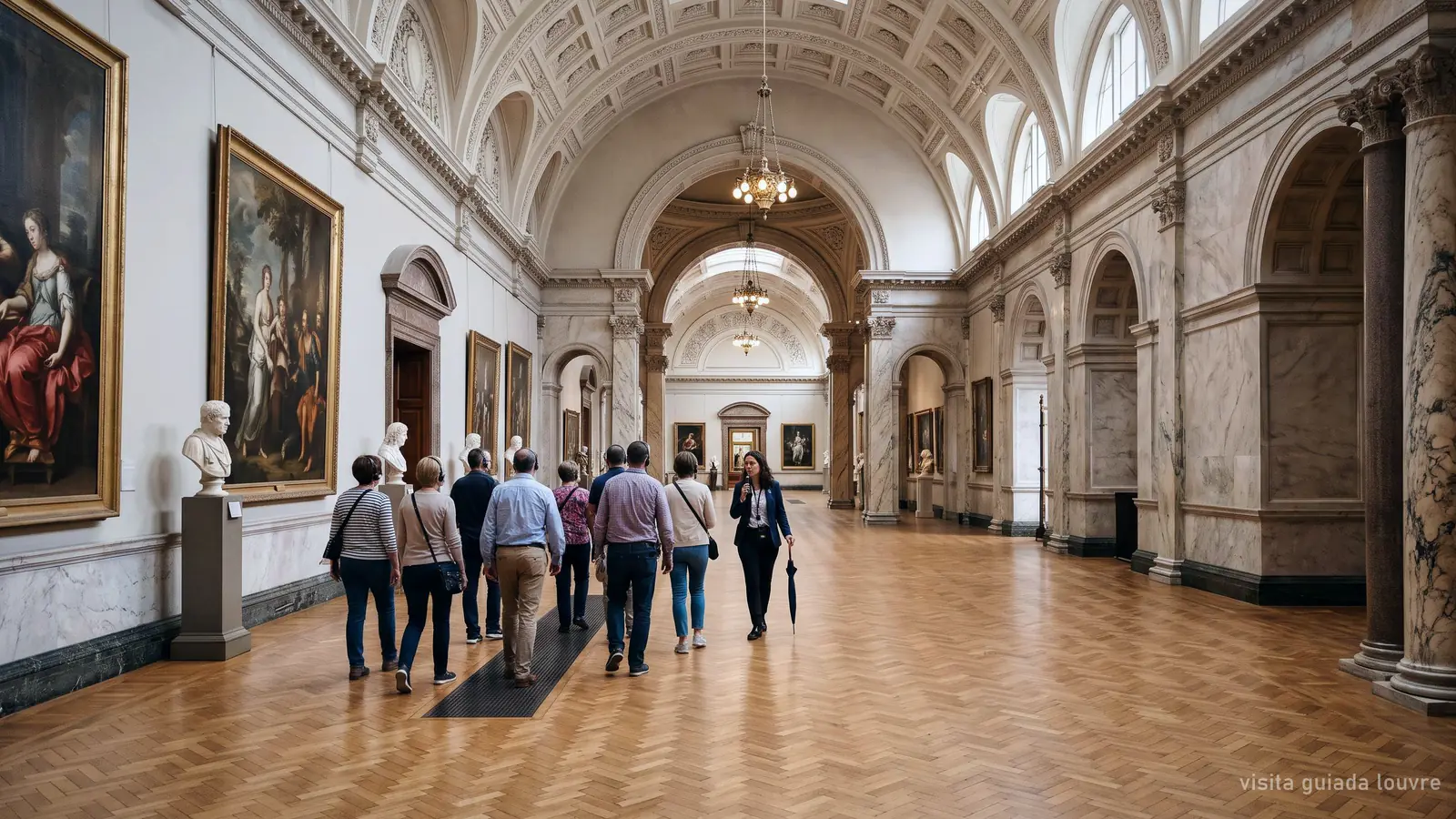
The best way to understand these eight centuries is to walk through them: the medieval moat in the Sully wing, the Second Empire rooms and the Apollo Gallery, whose central ceiling Delacroix painted in 1851. General admission costs 22 € for residents of the European Economic Area and 32 € for everyone else, and the museum is closed on Tuesdays. If you want someone to tell you the building’s story room by room, compare the Louvre guided tour options; and if it is your first time, start with the guide to visiting the Louvre Museum.
Check prices & dates
Book your tickets in advance: popular time slots sell out.
Book tickets
From$66per person
Check availability- Free cancellation up to 24 h before on 9 of 10 options
- Louvre entry included in all of them
- Prices in US dollars
Price checked Oct 27, 2026
Sources